Multihull Design We know that Owen Clarke Design are not the first office that comes to mind when thinking of multihull designs. However, we were first before anything else trimaran designers long before moving into the field of high performance monohulls with the development of Open 60s such as Kingfisher, and Ecover. Bare with us and please take the time to read the paragraphs below. They serve to illustrate our extensive and largely unknown background in trimaran and performance catamaran design to the media, interested parties, existing and future clients. 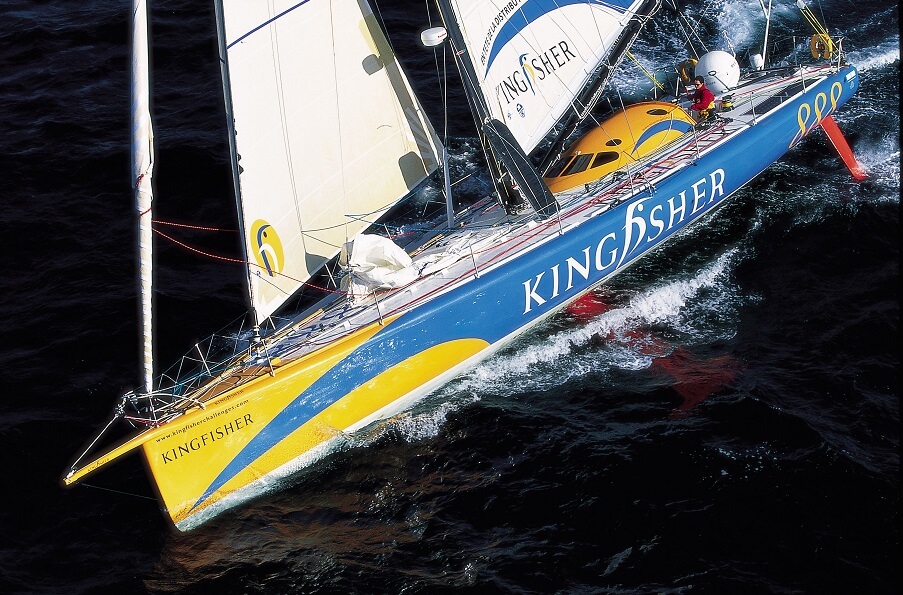 Credit: Thierry Martinez IMOCA 60s, with their carbon foils, twin rudders, rotating masts and high speeds were a natural progression from the trimaran and cruising catamaran design, as well as the racing we had until then been focused on. Also attractive to us was that like multihulls IMOCA 60s were open class, unrestricted by rating rules and favoured a 'from first principles' technical approach to design the lowest drag, fastest possible platform. It suited our skill set, they interested us. Since the late 90s trimaran and racer cruiser catamaran design has become mainstream and more viable than the early years of multihull development. In 1993 Merfyn Owen and Allen Clarke designed and built their first monohull. She was a radical 30' ultra-light displacement boat (ULDB) with twin rudders, carbon lifting keel and appropriately called, Maverick. In the six years before this Owen was exclusively designing, building and project managing racing and cruising multihulls pursuing a knowledge-based design process from the very beginning using probably the world’s first multihull VPP. The software Owen wrote in Fortran 77 was created while studying naval architecture at University College London and took more than a year to develop. Shortly after leaving university, design on his first yacht began in earnest. The result was the first ‘as wide, as long’ trimaran, Fiery Cross, 35' overall length and 34' wide, which he, Allen Clarke and a small team built in Cornwall between 1987 and 1988. Completed only weeks before that years Single-Handed Trans-Atlantic Race (OSTAR) in which her owner Rupert Kidd finished second behind a young Brian Thompson. With crew Allen Clarke and Alex Phillips, Fiery Cross was delivered back across the Atlantic in 88 from the OSTAR finish completing Owen and Clarke’s first Atlantic crossing together. Owen’s first introduction to racing multihulls was with Rupert Kidd in 1983 on the 30' Applejack (ex Mark One Tool Hire) gaining experience quickly delivering and racing boats of various sizes within the small UK multihull community. In 1985 he had his first big break at the age of 22 as navigator on the 85' maxi racing catamaran Novell Network for skipper Peter Phillips in the UAP Round Europe Race. Between 85 and 93 Owen continued to build up practical knowledge racing catamarans and trimarans in French regattas, the Formula 40' circuit and classic British events such as the Three Peaks Race. The winter of 1990-91 was spent managing the refit of Tony Bullimore's latest 60' trimaran, Spirit of Apricot, before sailing as crew in the Round Europe Race of that year. Spirit, designed by Barry Noble and Martyn Smith, was the beginning of the truly light weight powerful trimarans of today, in a class of her own in terms of displacement and outright speed. Despite a disastrous capsize three months before the start which led to the team missing the first two legs of the race, Spirit's outright speed dominated the event, with her winning the final leg into Toulon by over twelve hours. 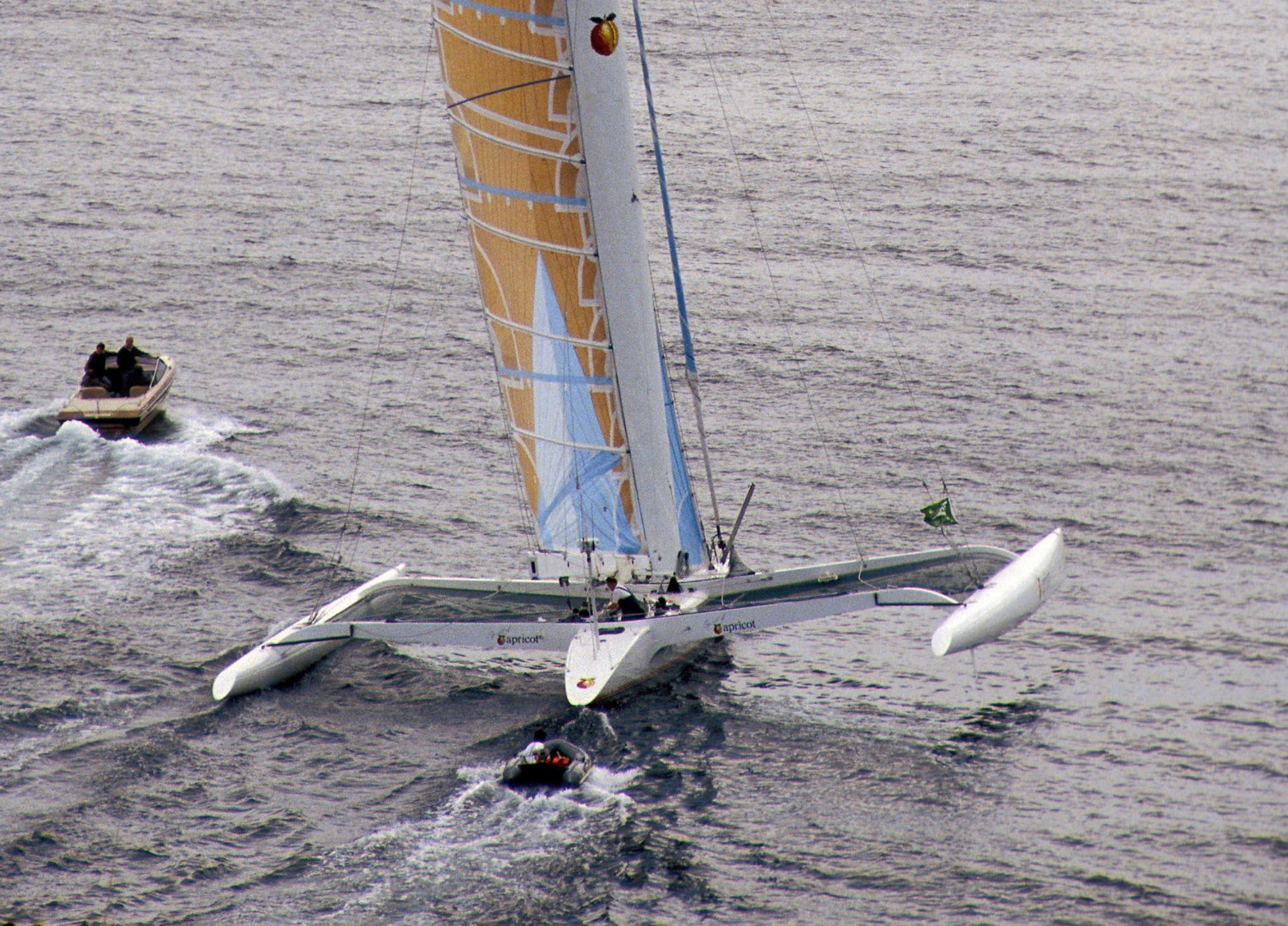 Credit: Alamy Stock Photo Today, the very same rationale that drew us into multihull design in the first place prevails and we now once more include the design of multihulls as part of our repertoire. Indeed, it’s only a few years ago that we were approached to create a Multi50 trimaran design and it was very disappointing when at the end of the preliminary design phase the sponsorship was terminated, ending the project. We have a passion to sail, design and develop innovative performance orientated yachts and multis fit that bill perfectly. Our largest multihull commission to date has been to develop a concept design for a 24m family custom cruising catamaran design. This was followed soon after by an 18m high performance carbon catamaran for an Australian client and boatyard. After a number of stalled projects in 2026 we expect construction to commence on a 22m aluminium blue water explorer catamaran. We are excited to be back ‘in the game’ again. We look forward to meeting future clients who are interested to work together and tread a different path in the search for an innovative and exciting design. If you might be that client and wish to begin that discussion contact us HERE. For an explanation of the technology behind the design process go to: NAVAL ARCHITECTURE For an insight into our engineering and detailed design work go to: ENGINEERING |